eCommerce website development

Online stores built to sell — Shopify, WooCommerce or custom builds

An online store built to convert, not just to display

Web Works Rise builds eCommerce websites for UK retailers, brands and businesses that sell online. Whether you are launching a first store, replacing a slow platform or adding online sales to an existing service business, we build stores designed to turn visitors into buyers.

The most common reason eCommerce sites underperform is not a lack of traffic — it is friction in the shopping journey. A confusing navigation, a slow product page, a lengthy checkout, unclear delivery information or a missing trust signal can each cause a customer to leave. We build stores that remove those barriers at every step.

Depending on your product type, order volume and need for customisation, the right platform may be Shopify, WooCommerce, a headless build or a fully custom solution. We advise on the right choice for the business, not the easiest one for us to build.

If you sell services and need customers to book or pay online, the approach is different — see our page on transport booking systemsfor an example.

For ongoing visibility after launch, our digital marketing servicehelps drive qualified traffic to the store.

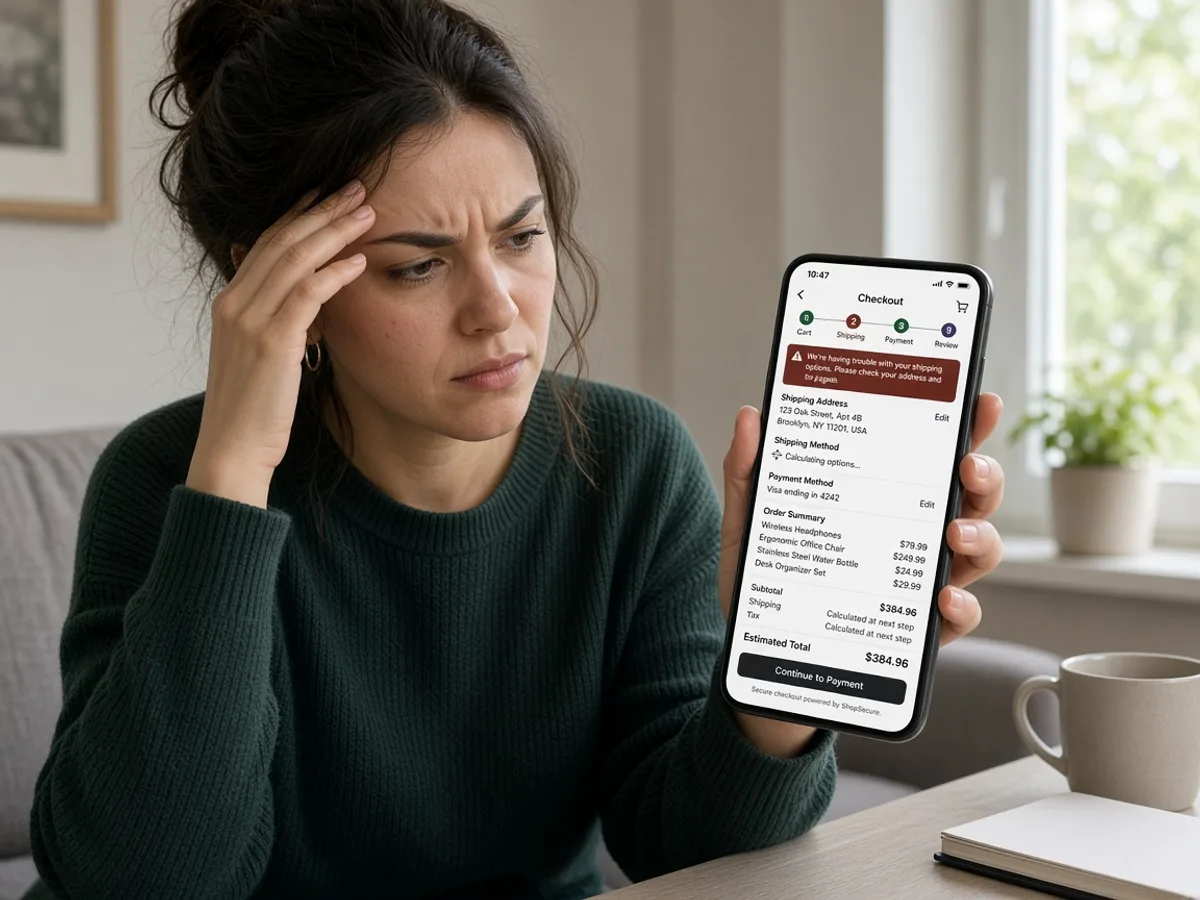
Customer looking frustrated at a confusing checkout page on her phone

Why eCommerce sites lose sales

Checkout abandonment. Long, confusing checkouts are the single biggest cause of lost sales. Customers add items and leave before paying.

Slow product pages on mobile. Most shopping starts on a phone. Slow-loading images, hard-to-tap buttons and poor mobile layouts drive customers to competitors.

Missing trust signals. Shoppers are cautious, especially on sites they have not used before. Missing reviews, unclear returns policies and no visible contact details all cause doubt.

Poor search and navigation. Customers cannot find what they are looking for. Filtering, sorting and search either do not work well or do not exist.

Platform limitations holding the business back. Some businesses outgrow their platform. An off-the-shelf template cannot support the product range, integrations or customer experience the business needs.

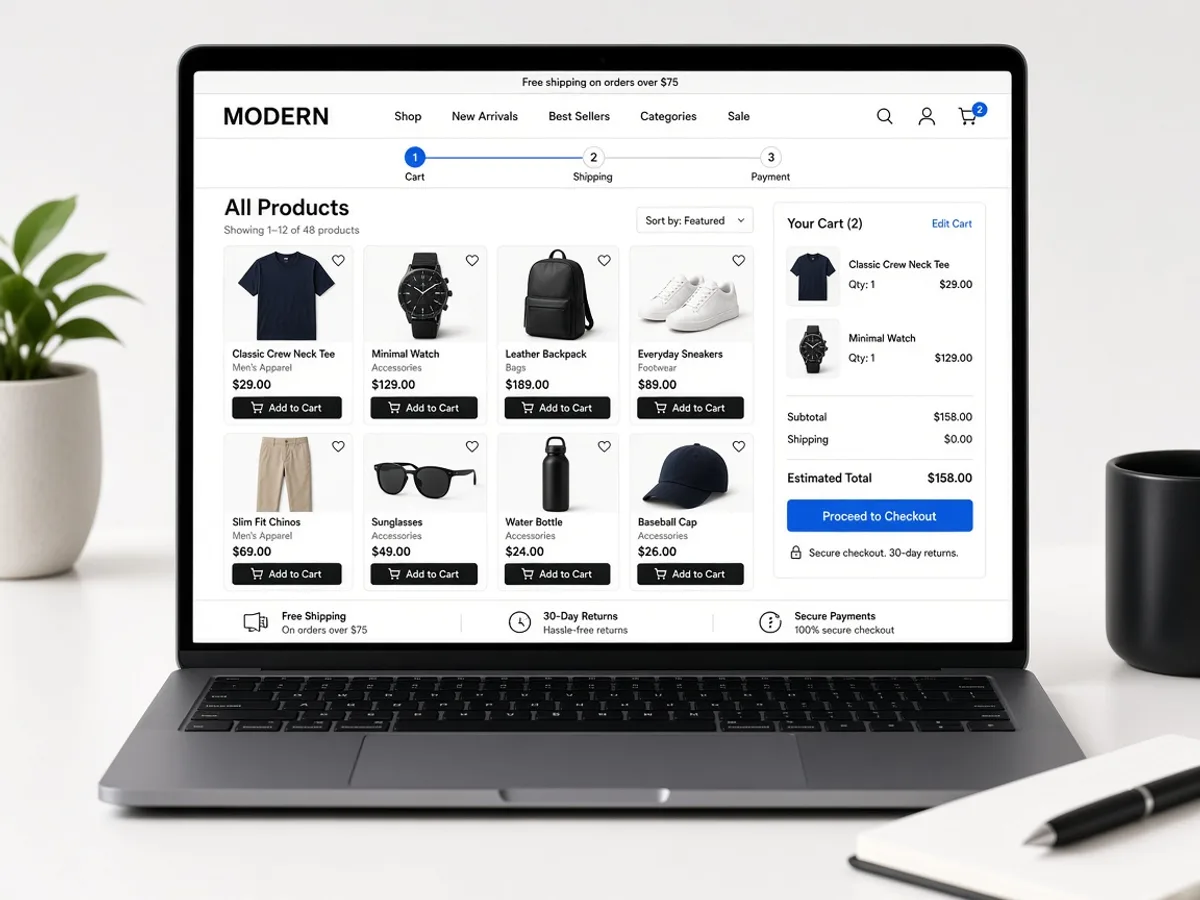
Clean modern eCommerce website on a laptop showing a product grid, pricing and a checkout flow

What an eCommerce build includes

Each store is scoped around the product catalogue, the customer journey and the platform. A typical build covers the following.

Platform selection and setup. We advise on whether Shopify, WooCommerce, a headless build or a custom solution best fits your products, order volumes and budget — and set it up correctly from the start.

Product and category pages. Pages designed to sell: clear photography presentation, concise descriptions, variant selectors and prominent add-to-cart buttons.

Optimised checkout flow. A short, logical checkout that removes unnecessary steps, supports multiple payment methods and sends clear order confirmations.

Mobile-first design. Designed for how customers actually shop — mostly on a phone, often in short sessions, expecting instant loading.

Trust signals and social proof. Reviews, security badges, delivery and returns information placed where they reassure the customer at the point of decision.

SEO and analytics setup. Product schema markup, category page optimisation, Google Analytics and Search Console connected so you know where sales come from.

How an eCommerce project runs

The approach depends on the platform and the scale, but the process is kept transparent throughout.

01 Discovery and platform advice

We understand the product range, sales volumes, integrations needed and budget, then recommend the right platform and approach.

02 Information architecture

The category and page structure is planned so customers can find products quickly and search engines can index the catalogue efficiently.

03 Design and UX

The visual design and the shopping journey are designed together, with the checkout and mobile experience receiving as much attention as the homepage.

04 Development and integration

Build, payment gateway integration, inventory, shipping rules, email notifications and any third-party tools such as reviews platforms or loyalty systems.

05 Test and launch

Every customer journey is tested end to end — adding to cart, checking out, receiving confirmation — before the store goes live.

Tell us about your store

Describe what you sell, your current platform situation and what is not working. We will come back with a practical recommendation.

Book a Free Consultation

eCommerce and conversion projects we have delivered

Full case studies are available for each project.

Related reading

These articles cover decisions that come up during an eCommerce project.

Why online retailers work with Web Works Rise

eCommerce projects require more than a good-looking storefront. They need a checkout that converts, integrations that work reliably and performance that keeps up with customer expectations on mobile. Web Works Rise has built booking and payment flows for UK businesses and understands what the transaction journey needs to deliver.

We advise on platform honestly. If Shopify is the right choice, we say so. If a custom build will serve the business better in the long run, we explain why. The recommendation is based on what fits the business, not what is quickest for us to build.

Frequently asked questions

Shopify or WooCommerce — which is better?

It depends on the product type, order volume and how much customisation is needed. Shopify is simpler to manage and scales well for standard retail. WooCommerce offers more flexibility and lower ongoing costs for complex catalogues. We advise on the right choice once we understand the business.

Can you migrate an existing store?

Yes. We migrate products, orders and customer data, set up redirects from old URLs and test everything before the new store goes live.

How long does an eCommerce build take?

A Shopify store with a standard catalogue typically takes six to ten weeks. A custom build with complex integrations takes longer. A timeline is agreed before the project starts.

Do you handle payment integration?

Yes. Stripe, PayPal and platform-native payment gateways are set up as part of the build. We test every payment journey end to end before launch.

Can you improve an existing store that is not converting?

Yes. A conversion review looks at where customers are dropping off and what changes would have the most impact. This can be a standalone project or lead into a rebuild.

Talk to the team

Tell us what you need, what you have today, and what a good result looks like. We will reply with a practical next step.

Book a Free Consultation