Branding and UI/UX for UK businesses

Identity and interfaces that make the next step clear

Web Works Rise designs brand identities and interfaces for UK businesses. The work covers the visual identity, the way services are organised, and the screens people use to enquire, book or get through a working day.

Design is judged by whether someone can tell what you offer and what to do next. A premium service, a busy transport site and a building company each need a different tone, but the layout always has the same job: make the offer specific and the next step obvious.

The designed pages are usually built as a website, by the same team.

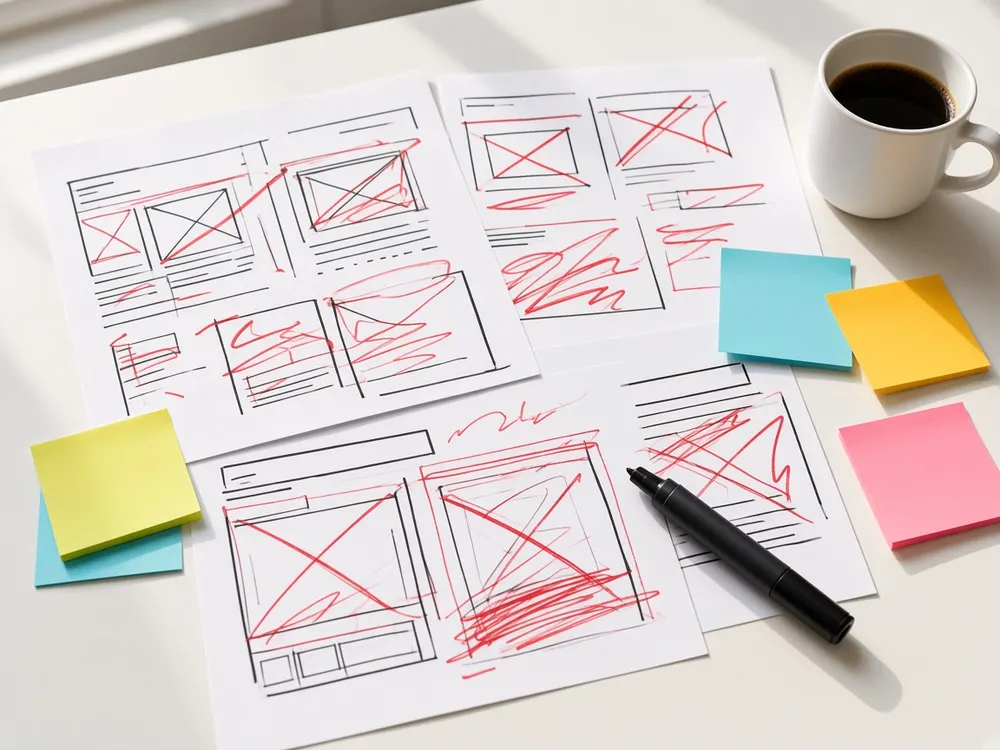
Printed website wireframes covered in red review marks and sticky notes

Design problems we help businesses solve

The site looks less capable than the business. The service is established, but the website still looks like an older template, so the first impression lags behind the work.

People cannot see what is on offer. Services, fleet or types of job are mixed together. Visitors guess, or they leave a vague enquiry that the team has to unpack.

The brand is inconsistent. Logo, colour and tone change from page to page, or there is no shared visual direction to apply to a new site.

The enquiry is buried. The action the business wants, such as a quote or a call, competes with links and blocks that carry the same weight.

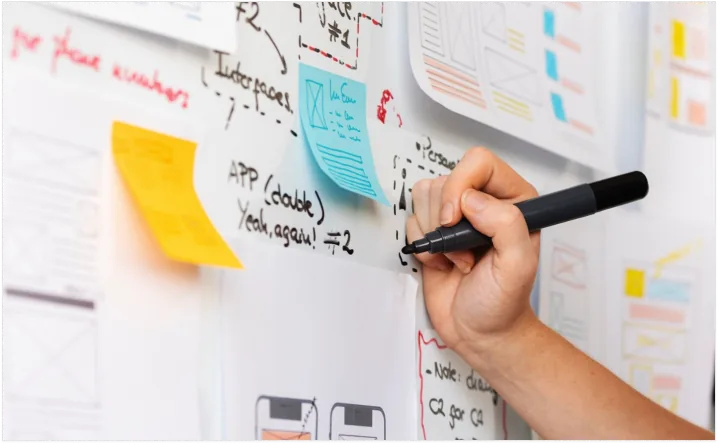
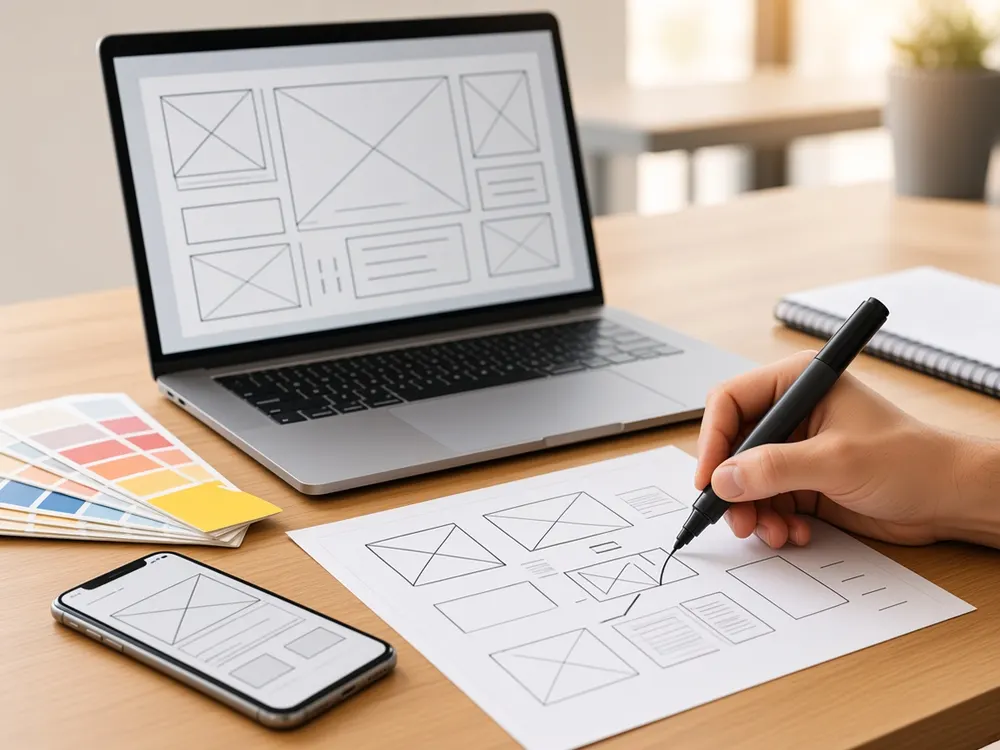
Designer sketching page wireframes beside colour swatches, a laptop and a phone screen design

What branding and UI/UX include

Design is scoped to each project. These are the parts the team delivers.

Brand identity. Logo, colour, type and a visual direction when the brand needs to be created or tightened. Coach Hire Network is a published example of a brand created for the project.

Interface design. The look and layout of the pages and screens, for the public site and for tools staff use.

Page structure and journeys. How services are grouped, what a visitor sees first, and where the quote or contact step sits.

Layouts for phones and larger screens. The same page is designed so the content and the main action still make sense on a phone.

A design the build can follow. Screens and rules the development team can implement, usually in the same project rather than as a file that is handed to someone else.

How a design stage runs

Design happens before the build is locked, so the pages are agreed while they are still easy to change.

01 The current journey

What a visitor or a member of staff is trying to do, and where the current site or tool makes that hard.

02 Direction

The brand and the tone of the interface, matched to the customers the business wants to reassure.

03 Key screens

The homepage, the main service pages and the enquiry, or the main screens of an internal tool.

04 Into the build

The agreed screens are developed by the same team, in Next.js, WordPress or Sanity as the project requires.

How the design is delivered

The design is produced so it can be built, not left as a separate presentation.

Websites
Brand and interface work is implemented in the website build, including Next.js, WordPress and Sanity projects.
Software screens
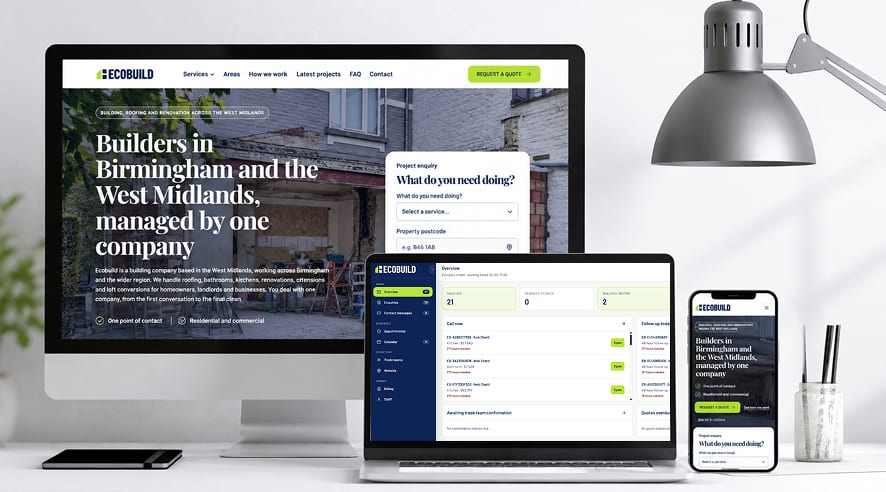
Internal tools get the same attention to labels, order and the action on the screen. The Ecobuild workspace is the published example.

Bring the page that is causing the trouble

A link to the current site, or a description of the screen staff struggle with, is enough to start. We will say whether the work is a visual refresh, a clearer structure, or both.

Book a Free Consultation

Relevant work

Each project below included design decisions that are visible on the finished site.

Coach Hire Network brand and website, shown in the case study

Coach Hire Network brand and booking journey

The brand was created for the project, including the logo and colour system. The interface was then organised around how people choose coach hire: clearer service navigation, a stronger page hierarchy, and a quote journey that can price and confirm a booking.

View this project

BCT Luxury website, shown in the case study

BCT Luxury interface

The interface was redesigned for executive and VIP clients. Typography, imagery and service pages were set up to present airport transfers, corporate travel and the fleet without a busy hire-site layout.

View this project
Bouden Coach Travel website, shown in the case study

Bouden Coach Travel quote journey

The main journeys were redesigned around quote requests. Service navigation and page hierarchy were rebuilt so coach hire, minibus hire and chauffeur travel each had a clear place, and the route to a quote was shorter.

View this project
Ecobuild website, shown in the case study

Ecobuild enquiry journey

The public site is structured around one idea: the customer should not have to organise each trade. The homepage, service pages and a short enquiry form follow that order. The coordinator screens continue the same job after the form is sent.

View this project

Why Web Works Rise

Design and development sit in one UK-led team, with delivery support from the hub in Tunisia. The people who design the screens are close to the people who build them, which keeps the interface practical.

The visual direction is tied to the customers the business serves. A luxury chauffeur brand and a building company are not given the same layout with a logo swapped in.

Frequently asked questions

Do you design the brand as well as the website?

Yes. Custom branding is part of this service: logo, colour, type and the visual direction of the site or product. Some projects need a new identity. Others need the existing brand applied with more consistency. Coach Hire Network is an example of a brand created from the start.

Can you redesign one journey without rebuilding the whole site?

Yes. A quote form, a service section or an internal screen can be redesigned on its own when the rest of the site can stay. If the underlying site cannot support the change, a rebuild may be the better option, and that is covered under web development.

Do you design for phones?

Yes. Key screens are designed so the content and the main action work on a phone and on a larger screen. Text, spacing and buttons are treated as part of the design, so the page stays readable and the next step is obvious.

Will the design be built by someone else?

Usually not. The same team designs and builds. If you already have a development team, the screens can still be prepared for them. Tell us at the start so the handover is part of the scope.

Talk to the team

Tell us what you need, what you have today, and what a good result looks like. We will reply with a practical next step.

Book a Free Consultation