


Blogs & News
Latest updates.

Birmingham or London web agency: how UK businesses should choose
An agency's postcode says less about the result than its relevant work, its team and how it communicates, and those are the things to compare.

Quote form best practices: how to get more useful enquiries
A quote form decides whether a ready buyer becomes an enquiry, and small choices about questions, steps and follow-up change both volume and quality.

Booking systems for UK coach companies: a practical guide
A booking system lets a coach operator handle quotes, availability and confirmations in one place, and the right version depends on volume and pricing rules.

How to build a coach hire website that turns visitors into quotes
A UK coach hire website wins the booking when a customer on a phone can see the right vehicle, trust the operator and request a quote in minutes.

Is your website losing customers? 9 signs it's time for a redesign
A UK website can look polished and still fail to produce useful enquiries, and these nine signs show when a redesign is worth a proper look.
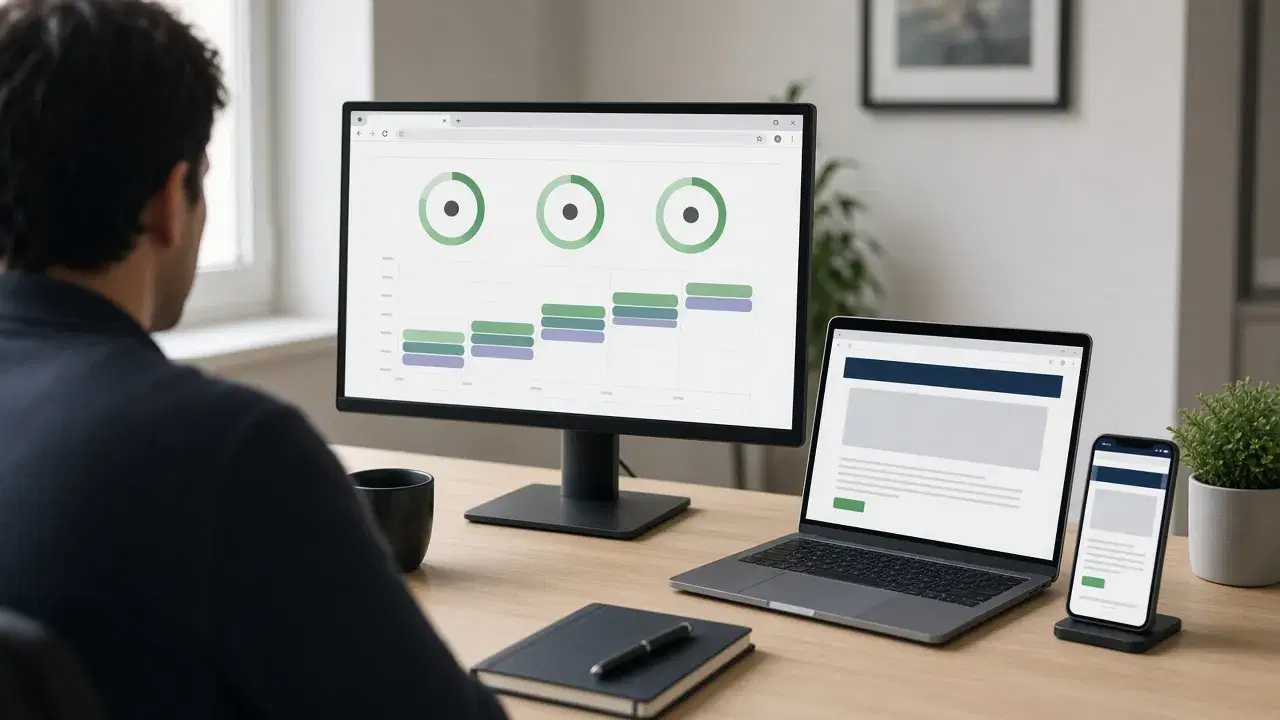
Website speed and Core Web Vitals: a practical guide for UK businesses
UK firms can improve website speed in a sensible order, using Core Web Vitals and three Google tools, without treating a score as a ranking promise.

When your business outgrows spreadsheets: is custom software worth it?
Spreadsheets and disconnected tools can quietly become the operating system of a growing UK firm, and custom software is only one of four responses.

How to introduce AI into your business: a practical 30-day roadmap
A UK firm can trial one AI workflow in four weeks by measuring a real task first, keeping a person in the loop, and deciding whether to continue.

What Google's Gemini agent means for UK business workflows
Google's Gemini agent can plan multi-step work across workplace apps, so a UK firm should decide what it may access before anyone switches it on.

Agentic AI is moving faster than enterprise governance
Deloitte's 2026 research shows many firms plan to deploy AI agents long before they have a mature way to govern what those agents do.

GitHub is rebuilding Git storage for AI coding agents
AI coding agents are driving far more repository activity, and GitHub is redesigning how it stores Git data so familiar developer workflows can keep up.

Microsoft's 2026 report shows why cyber defence has to speed up
Microsoft's 2026 Digital Defense Report describes faster attacks and a growing pile of vulnerabilities, and UK firms still have to patch what is exposed first.

AI agents are creating new security risks for businesses
An AI agent that can open files, call tools and act under a user's identity needs limits, logs and a check before it takes a sensitive action.

Web accessibility in 2026 still starts with design-system defaults
WebAIM's 2026 study found detectable WCAG failures on 95.9% of homepages, and the common faults are ones a design system can stop repeating.

W3C has updated the authorised French translations of WCAG
W3C published updated authorised French translations of WCAG 2.1 and 2.2 in September 2026, which UK teams shipping French pages should use as the shared reference.

Node.js 26 turns on the Temporal API and a new upgrade list
Node.js 26 enables the Temporal API by default and updates V8 and Undici, so UK teams should test the runtime before they treat the upgrade as routine.

AI infrastructure is now a business technology decision
McKinsey's 2026 outlook puts AI infrastructure next to agentic software and scientific AI, which means UK firms should plan data, hosting and cost before they scale.

Google Search Console now reports AI search visibility
Search Console's generative AI reports show impressions in AI Overviews, AI Mode and Discover, which UK sites should read next to clicks and enquiries.

What a UK building company needs from its website
A UK building company needs a website that explains who manages the job, and a workspace where the team qualifies enquiries, calls customers and books visits.

How much does a business website cost in the UK in 2026? A practical guide
A UK business website has no single price, because scope, design, integrations and ongoing ownership decide the investment more than a template quote.
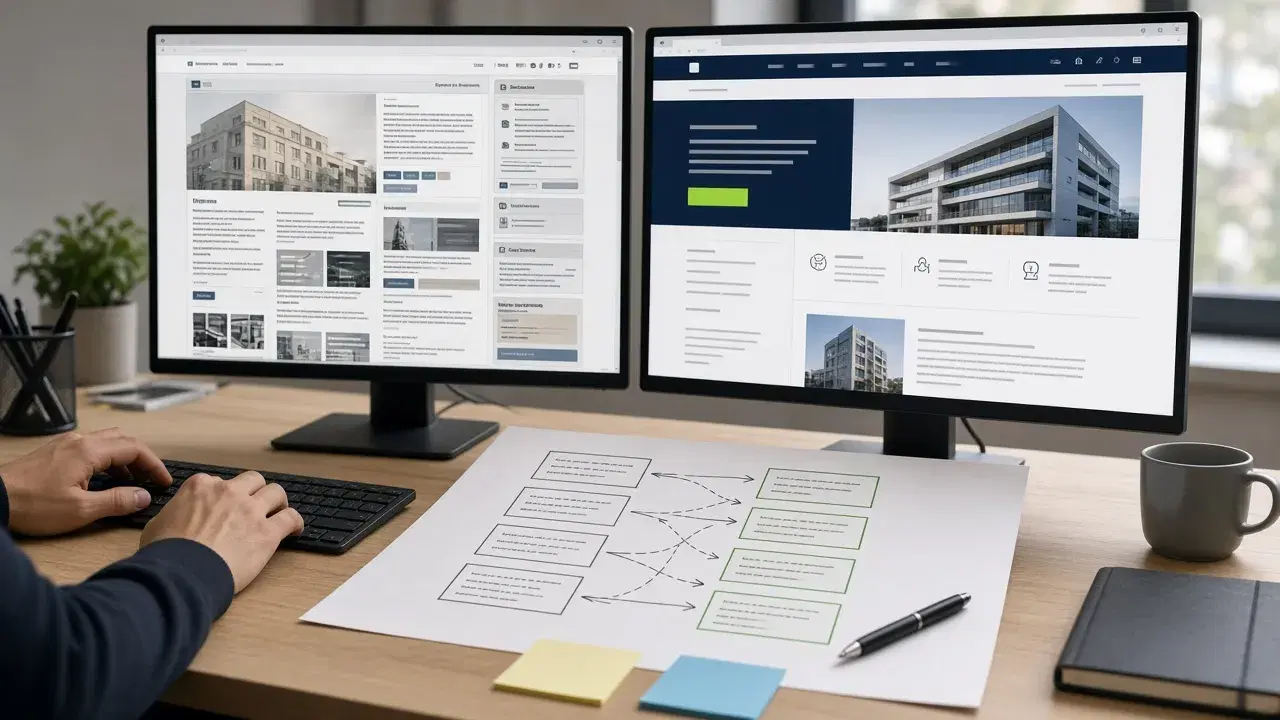
Website redesign vs rebuild: how UK businesses should decide
A UK firm should treat a redesign and a rebuild as different projects, and decide from the site's technology, experience and next job.

Core Web Vitals in 2026: what UK businesses should actually measure
Core Web Vitals measure loading, responsiveness and visual stability, so a UK business can judge real website performance on a phone beyond one speed score.

SEO is no longer enough: how UK businesses can prepare for AI search
UK businesses can stay visible in traditional search and in AI-generated answers by pairing sound SEO with clear, structured and trustworthy business information.

OpenAI's Dots assistant, and the model held back for safety
OpenAI has released Dots, an always-on assistant for connected apps, while holding back a newer model that failed checks on scope and authorisation.

The US inquiry into AI firms, and what UK businesses should ask
A US regulator is asking if leading AI firms misled people about risk, so a UK buyer should test those claims before signing.

Why AI safety warnings matter to firms that are not building models
Researchers want oversight of AI that may improve itself quickly, and a UK firm still needs a person to check any assistant that acts alone.

What rising AI energy use means for a UK business
US data centres could use up to 12% of electricity by 2028, which UK firms should read as cost rather than a local prediction.

React vs Next.js: which to choose for your next website
UK firms choosing React or Next.js should compare search visibility, page speed, room to grow, and how quickly a useful first version can go live.

How AI is changing business software: 7 practical uses for 2026
UK firms get more from AI when it takes a specific job, such as answering repeat questions, sorting documents or spotting patterns in day-to-day data.

MVP development: launch a digital product with less risk
An MVP is the smallest useful version of a product, built so a UK business can test demand before funding a full software build.

Website maintenance and support for UK small businesses
After launch, a UK small business website still needs security updates, bug fixes, content changes, performance checks and hosting support to stay reliable.

AI in 2026: From Emotional Intelligence to Agentic Systems
Discover the next big innovations in AI technology, from agentic systems to quantum-accelerated AI that will transform industries.

UX/UI in 2025: AI-Powered Personalisation and Ethical Design
User experience is evolving fast. In 2025, AI-driven personalisation is the biggest trend—interfaces now adapt in real time based on user behaviour.

Cloud and DevOps in 2025: AI-Driven Automation and Multi-Cloud Strategies
Cloud computing and DevOps are converging with AI to create smarter, faster, and more secure systems with predictive analytics.

Cybersecurity and IT Consulting in 2025: Zero Trust and AI Defence
Cybersecurity threats are escalating with AI-powered attacks. Zero Trust architecture and AI-driven threat detection are essential.